About Natural Climate Solutions
IN THIS MODULE
You will learn about:
Federal, provincial & territorial government funding
Philanthropy
Carbon offset revenue
First Nations own-source revenue
Conservation Trust Funds & debt-based instruments
Education and research institutions and others
Many natural climate solutions projects require both short-term, upfront funding to support scoping and feasibility studies, and long-term funding to support project development, implementation, and monitoring. Here are some examples of funding sources that could be used to support a natural climate solutions project.
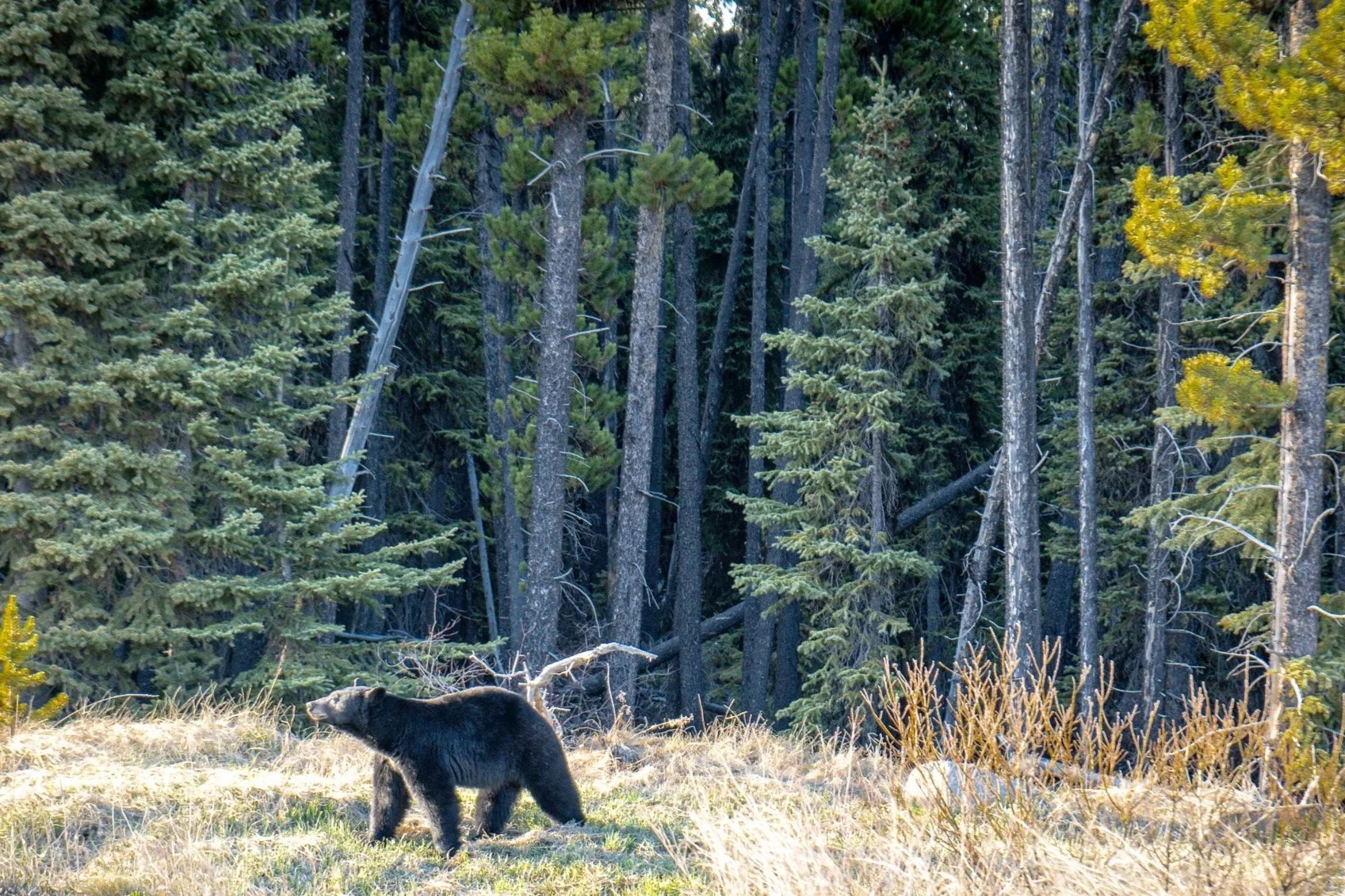
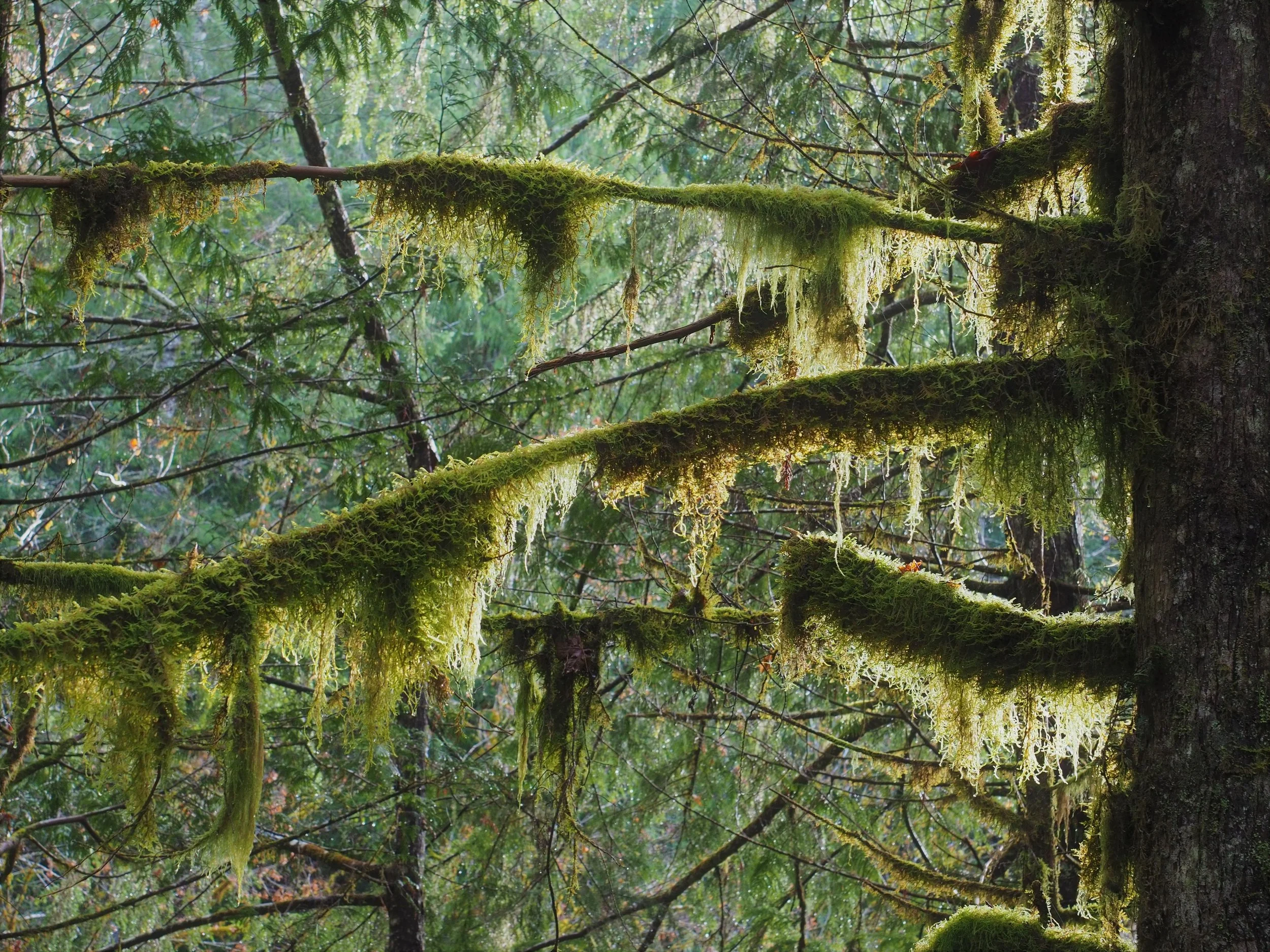
Provincial and territorial grants vary widely in size and tend to focus on a province's priorities and objectives.
Funding streams usually span 1-3 years and are used to support initial capital expenditures for conservation or natural climate solution projects. [57]

Carbon offset revenue
A carbon offset project maintains or improves natural processes with the goal of reducing or removing carbon dioxide from the atmosphere.
The benefits generated from a carbon project can be sold for money to those who would like to claim the benefits of the carbon emissions reductions or removals.
Carbon credits are sold in a government-managed marketplace or a third-party-managed marketplace with contract agreements between sellers and buyers.

For more information about carbon offsets and carbon markets, visit First Nations Carbon Toolkit (carbontoolkit.org), created by Ecotrust Canada and the BC Assembly of First Nations.


Debt-based instruments
Education and Research Institutions
FUNDING SOURCES
Federal government funding
In 2016, Canada signed the Paris Agreement and committed to cutting GHG emissions to 40-45% below 2005 levels by 2030 and achieving net-zero emissions by 2050. In 2020, Canada pledged to conserve 25% of its lands and waters by 2025, and 30% by 2030 to halt biodiversity loss (also known as “30x30”). As part of the effort to implement the Kunming-Montreal Global Biodiversity Framework (KMGBF), Canada created a Nature Strategy and committed federal grants and programs to achieve its national targets, such as 30x30. [54]
On April 29, 2026, Canada published A Force of Nature: Canada's Strategy to Protect Nature [55], announcing $3.8 billion in federal funding, a grants program, and other federal actions to advance nature protection. This includes investments in the establishment of national parks, urban parks, marine protected areas, National Wildlife Areas, Indigenous Protected and Conserved Areas (IPCAs) and Other Effective Area Based Conservation Measures (OECMs). Several dedicated funds, such as the Canada Nature Protection Fund, are set to launch later in 2026. [56]
In addition, several groups of Indigenous Nations are advancing conservation through the Project Finance for Permanence (PFP) model, which leverages federal, provincial and private funding sources to create long-term, sustainable financing for the protection and stewardship of their territories.
To learn more about Canada’s Nature Strategy, visit ECCC’s webpage here: A Force of Nature: Canada’s Strategy to Protect Nature.
Provincial & territorial government funding
Philanthropy
Philanthropic grants can vary widely in size and can be flexible enough to meet a broader set of community priorities, depending on the funder’s priorities and areas of focus. [58]
These programs are increasingly designed to address Indigenous needs, with funders supporting Indigenous-led conservation and stewardship, including IPCA development and implementation, cultural resurgence, land-based healing, food sovereignty, and land use planning. [59]
Philanthropy grant programs are showing growing interest in funding natural climate solutions, including Indigenous-led initiatives. [60]
Depending on their priorities, these programs may focus on projects that aim to reduce emissions, conserve natural ecosystems, and promote land stewardship, while enhancing community well-being on the land. [61]

First Nations own-source revenue
First Nations’ own-source revenue refers to funds collected by Indigenous governments or organizations that can be used for community priorities, including funding a natural climate solution project [62].
Own-source revenue can include property taxes, sales taxes, user fees, timber sales, rental income, commercial leasing, licensing fees, proceeds from revenue-sharing agreements, endowment fund earnings, renewable energy ventures, carbon-offsetting ventures, and other community and social enterprise income.
Another own-source revenue could be settlement agreements and treaty payments [63].
Conservation Trust Funds
Conservation Trust Funds (CTFs) are organizations that invest capital to generate income for long-term conservation work. They are designed to provide stable, ongoing financial support to the people and places they serve.
CTFs prioritize impact-driven funding, often through grants, but they could also have revenue-generating objectives to expand and sustain the fund itself. To achieve their objectives, CTFs can use various mechanisms, including grants, loans, microcredits, bonds, seed financing, or market-based mechanisms like carbon offsets. [64]
EXAMPLE
Coast Funds
Coast Funds is a Conservation Trust Fund created to support First Nations across the Great Bear Rainforest and Haida Gwaii along the coasts of British Columbia.
Coast Funds operates through two entities:
Coast Economic Development Society – manages $60 million in economic development funding;
Coast Conservation Endowment Fund Foundation - manages a $2 million fund for conservation planning and $56 million of an endowment fund provided by the Government of Canada, Province of British Columbia, and six private foundations.
The fund grows by investing in a diverse portfolio of assets across Canada and around the world. The income it earns is shared with participating First Nations to support their ongoing conservation work — providing a stable, lasting source of funding for generations to come.
Debt-based instruments in conservation leverage capital from investors through bonds, loans, or other forms of borrowed funds to achieve targeted conservation objectives. These instruments are set up to repay investors within a defined timeframe. Common examples include green loans, sustainability-linked loans, and conservation impact bonds.
EXAMPLE
Deshkan Ziibi Conservation Impact Bond (DZCIB)
An example is the Deshkan Ziibi Conservation Impact Bond (DZCIB), launched in 2019 by the Carolinian Canada Coalition, in partnership with Deshkan Ziibi (Chippewas of the Thames First Nation) and the Oneida Nations of the Thames.lxv Designed as a long-term financing mechanism, DZCIB aims to improve ecosystem health and biodiversity in Ontario’s Carolinian Zone (also known as the Lake Erie Lowland).
The Carolinian Zone covers major urban centres such as Toronto, Hamilton, Niagara Falls, Sarnia, London, and Windsor, and has suffered significant habitat loss due to extensive urbanization and farming.
As a conservation impact bond, DZCIB attracts investors to provide upfront capital in the form of a multi-year loan to fund on-the-ground conservation work led by environmental organizations. If the project accomplishes its conservation objectives, the loan is repaid by payers who are motivated by social and environmental outcomes. The project was also matched by $300,000 in federal funding in 2021, along with private-sector contributions. [66]
For more information about DZCIB, visit The Deshkan Ziibi Conservation Impact Bond Report.
Partners:
Carolinian Canada
Deshkan Ziibi (Chippewas of the Thames First Nation)
Oneida Nations of the Thames
Delaware Nation of Moraviantown
Ivey Business School at Western University
Habitat partners including Lower Thames Valley Conservation Authority, Alternative Land Use Services Canada, Thames Talbot Land Trust, City of London, ReForest London, Camp Kee-Mo-Kee, and the Living Center.
Known funders:
Verge Capital
3M Canada
Pollinator Partnership
Government of Canada
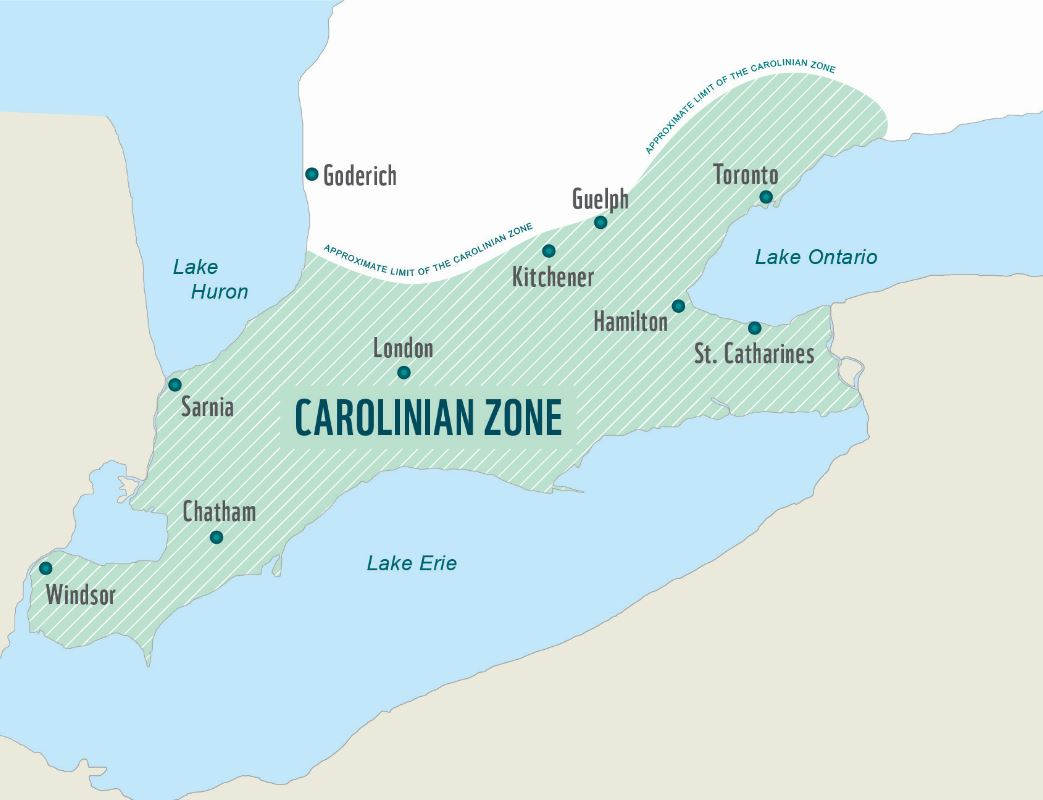
Carolinian Zone. Image credit: WWF
Conservation Impact Bond Model. Image credit: Carolinian Canada
The Carolinian Canada Conservation Impact Bond Model. Image credit: Carolinian Canada
Research and education institutions have, in the past, brought resources into local economies, e.g., Bamfield Marine Station, Hakai Institute, Cowichan Lake Research Station, and UBC research forests. Researchers are increasingly encouraged to spend a higher percentage of their budgets in the local communities where they work. Those who steward ecosystems/species (whether through hiring, training and certifications, direct donations or supporting local organizations that do the training) receive a higher proportion of the funding.
Partnering with a research-ready entity that can receive research grants may be a good fit if your goals and values are aligned. These dollars can supplement cultural, educational, and social programs. The creation of an ancient forest research institution on the west coast of Vancouver Island and/or Haida Gwaii has the potential to provide an important source of revenue.
-
[54] Environment and Climate Change Canada. (2024). Canada’s 2030 Nature Strategy: Halting and Reversing Biodiversity Loss in Canada. https://publications.gc.ca/collections/collection_2024/eccc/en4/En4-539-1-2024-eng.pdf
[55] [56] lv Environment and Climate Change Canada. (2026). A force of nature: Canada’s strategy to protect nature. https://publications.gc.ca/collections/collection_2026/eccc/en4/En4-792-2026-eng.pdf
[57-63] Popa, A., Dixon, R., 2024. Finance for Forests: A Guide to conservation finance options for First Nations’ conservation and stewardship. Coast Funds. Available from: https://coastfunds.ca/wp-content/uploads/2024/06/FinanceForForests_Summary_digital-pages.pdf
[64] Twigg, M., Sushant, Olmsted, P., Awan, T., Desrochers, C., Elgie, S. (2022). Investing in the future of Ontario’s Greenbelt. Smart Prosperity Institute. Available from: biblioteca.biofund.org.mz/wp-content/uploads/2021/09/1630919482-CTFs%20and%20the%20Private%20Sector%20-%20Wolfs%20Company%20August%202021.pdf
Additional resources for financing NCS
Coast Funds
In June 2024, Coast Funds released Finance for Forests, a guide to financing conservation, stewardship, and Indigenous Guardian programs. The report is an excellent resource to learn more about the different conservation finance pathways listed above. [67]
RAD Network
The Restore, Assert, Defend Network has published a report called Cultivating Capacity: A Scan of Needs and Resources for Indigenous-led Nature-based Solutions and compiled a database of existing tools and resources to support communities exploring Indigenous-led conservation. [68]
Ecotrust Canada
Advancing Indigenous Protected and Conserved Areas through Carbon Financing discusses enabling community, political, and governance conditions to achieve IPCAs with carbon offset revenue in Canada.
-
[67] Popa, A., Dixon, R., 2024. Finance for Forests: A Guide to conservation finance options for First Nations’ conservation and stewardship. Coast Funds. Available from: https://coastfunds.ca/wp-content/uploads/2024/06/FinanceForForests_Summary_digital-pages.pdf
[68] estore, Assert and Defend (RAD) Network. (2024). Cultivating Capacity: A Scan of Needs and Resources for Indigenous-led Nature-based solutions. https://radnetwork.ca/wp-content/uploads/2024/05/RAD-Network-NbS-Capacity-Scan.pdf
Restore, Assert and Defend (RAD) Network. (n.d.). Additional Tools and Resources. https://radnetwork.ca/additional-tools-resources/
[69] Ecotrust Canada, BC Assembly of First Nations. First Nations Carbon Toolkit., (2023). https://www.carbontoolkit.org/
[70] Connolly, M., (2022). First Nations Carbon: A BCAFN Discussion Paper. https://www.bcafn.ca/sites/default/files/docs/reports-presentations/BCAFN-Carbon%20Offset%20Discussion%20Paper_Feb%202022_%20Web_0.pdf
BCAFN
In 2023, Ecotrust Canada teamed up with the British Columbia Assembly of First Nations to create carbontoolkit.org, a free education tool to support and inform Nation-led carbon offset projects. [69]
First Nations Carbon – A BCAFN Discussion Paper offers valuable insights into First Nations right to carbon on their lands and opportunities and challenges for First Nations Land-Based Carbon Offsets projects. [70]
In conclusion
Natural climate solutions are a powerful and proven way to tackle humanity’s effect on the climate. If we deploy them wisely, we can address one of the biggest problems facing our society.
We hope this toolkit has provided some guidance on why and how nature can help us reduce greenhouse gas emissions.
Contact us.
climate@ecotrust.ca
604.682.4141
Vancouver office
225 West 8th Avenue, Suite #300
Vancouver, BC
V5Y 1N3
Prince Rupert office
425-309 2nd Avenue West,
Prince Rupert, BC, V8J 3T1
250.624.4191
-
You can contact Ecotrust Canada's Climate Resilience Team: climate@ecotrust.ca.